

Is English Classes for Children Worth It? An Honest 2026 Assessment
Is English Classes for Children Worth It? An Honest 2026 Assessment
In today’s hyper-connected world, English proficiency is no longer just a resume-booster—it is a foundational life skill. As we navigate 2026, the rise of digital learning platforms, AI-driven personalization, and immersive technologies has completely transformed how kids learn languages.
But with so many options and expenses to consider, are formal English classes actually worth the investment for your child? Let’s break down the real value, the modern shift in teaching methodologies, and how to make the right choice.
Why English Proficiency Matters More Than Ever
English remains the undisputed global lingua franca, dominating international business, science, technology, and digital media. Equipping children with strong language skills early gives them a distinct competitive edge in an increasingly globalized job market.
Beyond career prospects, early language acquisition provides critical cognitive, academic, and social advantages:
- Cognitive Growth: Learning a second language improves memory, multitasking, problem-solving, and critical thinking.
- Academic Success: A strong command of English supports better performance in other global academic subjects.
- Cultural & Social Connection: It allows children to access a massive wealth of global literature and media, while enabling them to form international friendships and collaborations.
The 2026 Classroom: How Language Learning Has Evolved
Gone are the days of rote memorization and dry grammar drills. Modern English classes leverage interactive methodologies—like gamification and storytelling—to spark genuine curiosity and a lifelong love for learning.
The Rise of EdTech and Personalization
The educational landscape in 2026 heavily integrates technology to maximize engagement:
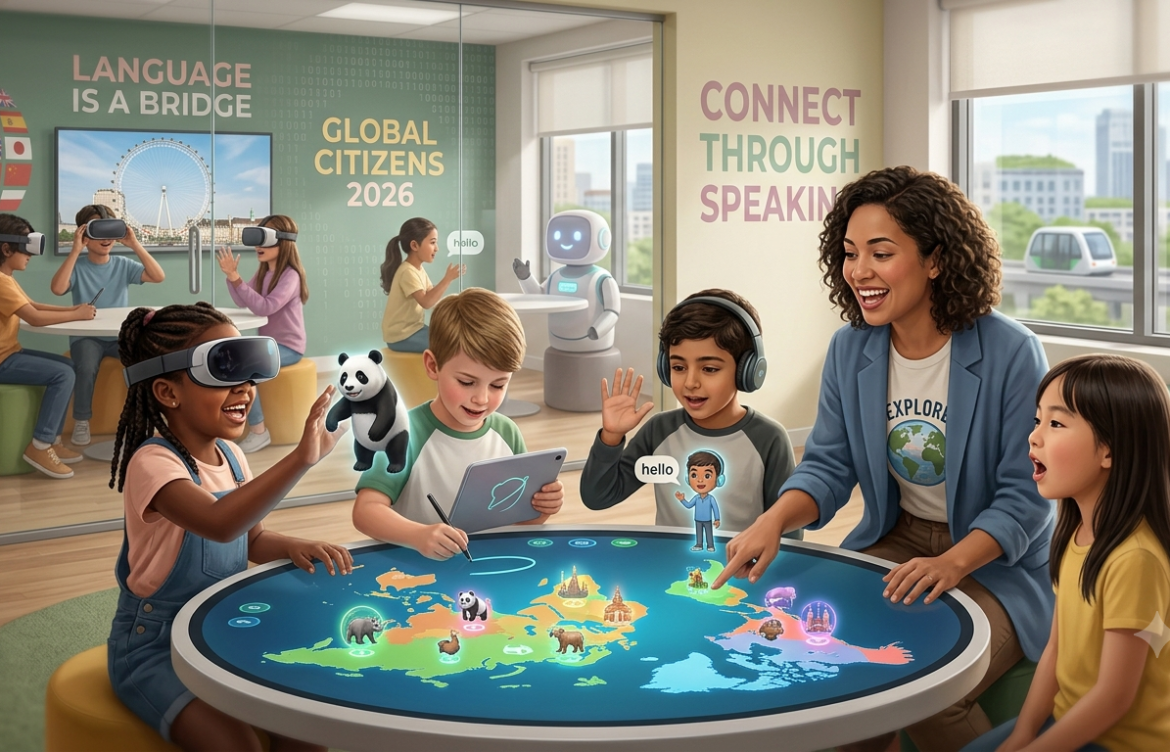
- Immersive Tech: Virtual Reality (VR) and Artificial Intelligence (AI) create dynamic, immersive environments where children can practice real-world scenarios.
- Data-Driven Customization: Modern platforms use data analytics to track a child’s performance and automatically adjust the curriculum to fit their unique learning pace, strengths, and goals.
Choosing the Right Fit: Factors for Parents to Consider
If you decide to enroll your child in an English program, a one-size-fits-all approach won’t work. Consider these critical factors to ensure a high return on your investment:
| Factor | What to Look For |
| Learning Style & Environment | Decide if your child thrives in structured settings or flexible, creative environments. Smaller class sizes offer better personalized attention. |
| Curriculum & Methodology | Ensure the material aligns with your child’s academic goals and incorporates engaging, interactive techniques. |
| Tutor Qualifications | Look for certified educators (ESL/language education credentials) who have a proven track record of teaching children. |
The Power of One-on-One Lessons
For a highly focused approach, one-on-one lessons provide immediate feedback and maximum interaction. A typical high-quality lesson structure includes:
- The Warm-Up: Engaging quizzes or interactive games to spark interest.
- Core Teaching: Practical vocabulary, reading comprehension, and real-time dialogue.
- Review & Practice: Homework or multimedia assignments to reinforce the day’s concepts.
Overcoming Common Challenges
Language learning isn’t always smooth sailing. Here is how modern educators and parents tackle common roadblocks:
- Handling Learning Anxiety: Many children feel anxious about making mistakes. The best environments are supportive and non-judgmental, treating mistakes as natural steps in growth.
- Managing Different Paces: Every child learns differently. Tutors should seamlessly adjust lesson plans to revisit tricky concepts rather than rushing ahead.
- Maintaining Consistency: Consistency is key to retention. Parents should establish a predictable routine and use milestone-based rewards to keep motivation high.
Pro-Tip for Parents: You can drastically boost your child’s progress at home. Integrate English books, movies, and music into their daily routines, encourage casual conversations in English, and celebrate their small wins to build confidence.
The Bottom Line: Is It Worth It?
Yes. Investing in quality English classes is highly valuable, but its worth depends on how it is delivered.
Rather than just chasing grades, the best programs focus on holistic development—building communication, confidence, and a passion for knowledge. When paired with personalized teaching and the right technology, English classes give your child the tools to confidently navigate, collaborate, and succeed in tomorrow’s world.